We can build it and make things better.
I'm open to new projects and other opportunities.
Let's Connect →
SURVEILLANCE INTELLIGENCE
OmniaOne is a cloud-based geospatial interface that assists the U.S. military in conducting surveillance mission protocols.
ABMS OmniaONE was designed to support large-scale surveillance and monitoring operations across distributed enterprise and defense environments. The platform unified operational intelligence, geospatial monitoring, and mission-critical workflows into a centralized interface for real-time coordination and analysis.
Operational monitoring systems were fragmented across multiple tools, workflows, and data environments. Analysts faced limited visibility into surveillance coordination, delayed escalation pathways, and inconsistent access to operational intelligence across teams and systems.
OmniaONE is the visual interface that displays data on the Common Operating Picture (COP) so Mission Commanders can quickly and confidently select targets and Courses of Action (COAs) for a desired effect. The system automates data flow from the sensors of military assets across every stage of military engagement.
Senior UX Designer, Hypergiant
12 Weeks
VP of Design, Senior Designer, 6 UX Designers, 3 Engineers, 2 Developers
Figma, Confluence, Jira, Slack
Audited the legacy surveillance tools operators relied on daily, surfacing 157 task pain points across the existing data and task ecosystem.
Established that under time pressure, operators needed a strict information hierarchy instead of max data density, shifting requirements from "show everything at once."
Designed visualization to balance geospatial detail with operational clarity, and built a modular component system so status indicators, alerts, and markers were consistent.
Validated wireframes against real mission scenarios, testing how quickly commanders could identify targets and select a Course of Action, keeping familiar patterns.
Delivered a unified surveillance and monitoring prototype built to support real-time coordination across distributed operational teams within the data ecosystem.
SYSTEM OVERVIEW
OmniaOne is a centralized monitoring workspace designed to help analysts track surveillance activity, coordinate operational responses including targeting hostile threats, and improve visibility across distributed data ecosystems.


Real-time operational monitoring across surveillance environments, alerts, and coordinated activities.

Visualizes surveillance activity, operational zones, and monitoring relationships across distributed environments.

Manages operational tasks, analyst workflows, and surveillance coordination processes.

Tracks operational events, escalation workflows, and coordinated monitoring activities across teams.
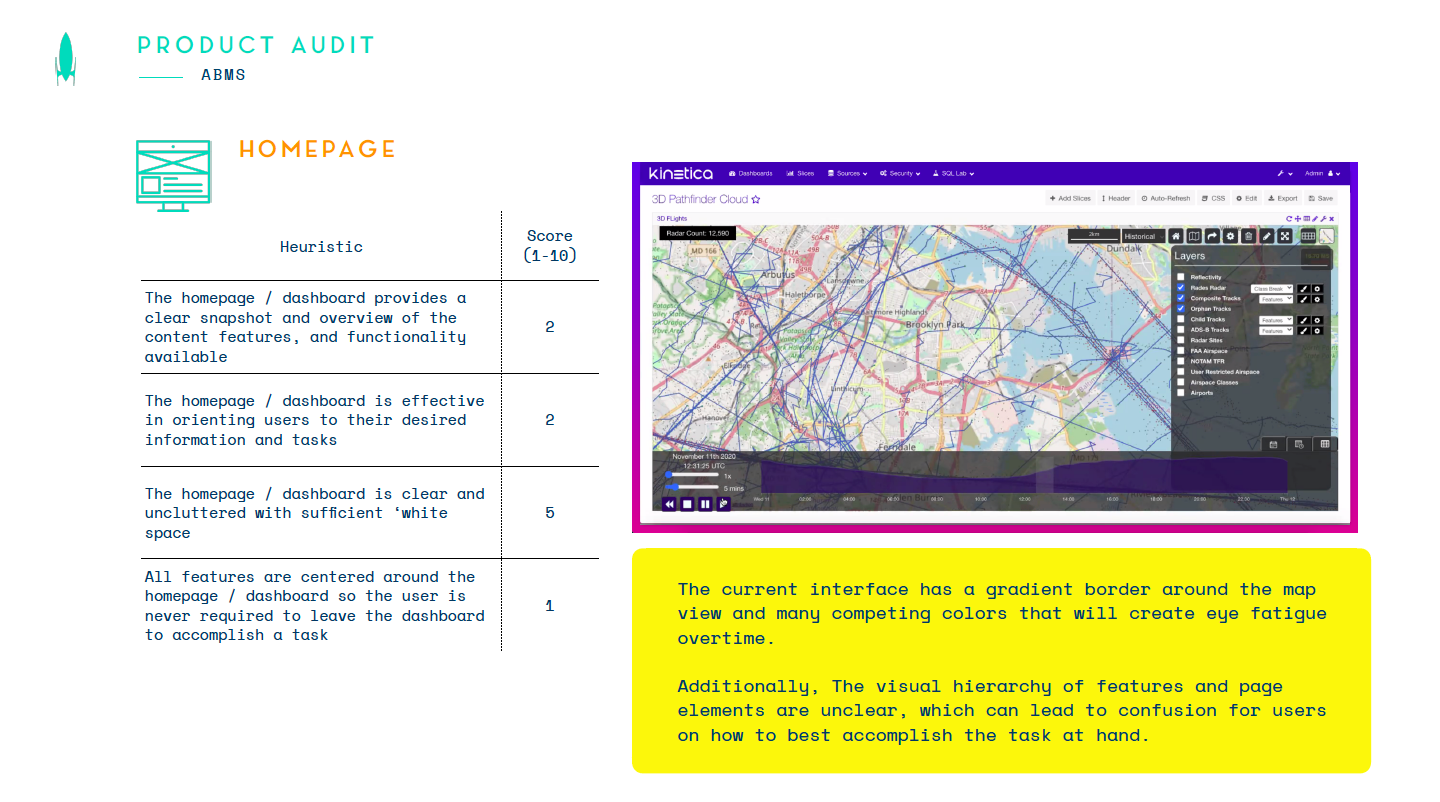
Before designing new workflows, I audited the legacy surveillance and monitoring tools operators relied on daily, and catalogued existing interaction patterns, identifying which behaviors were deeply ingrained through years of use, and flagging where legacy decisions were creating coordination gaps.
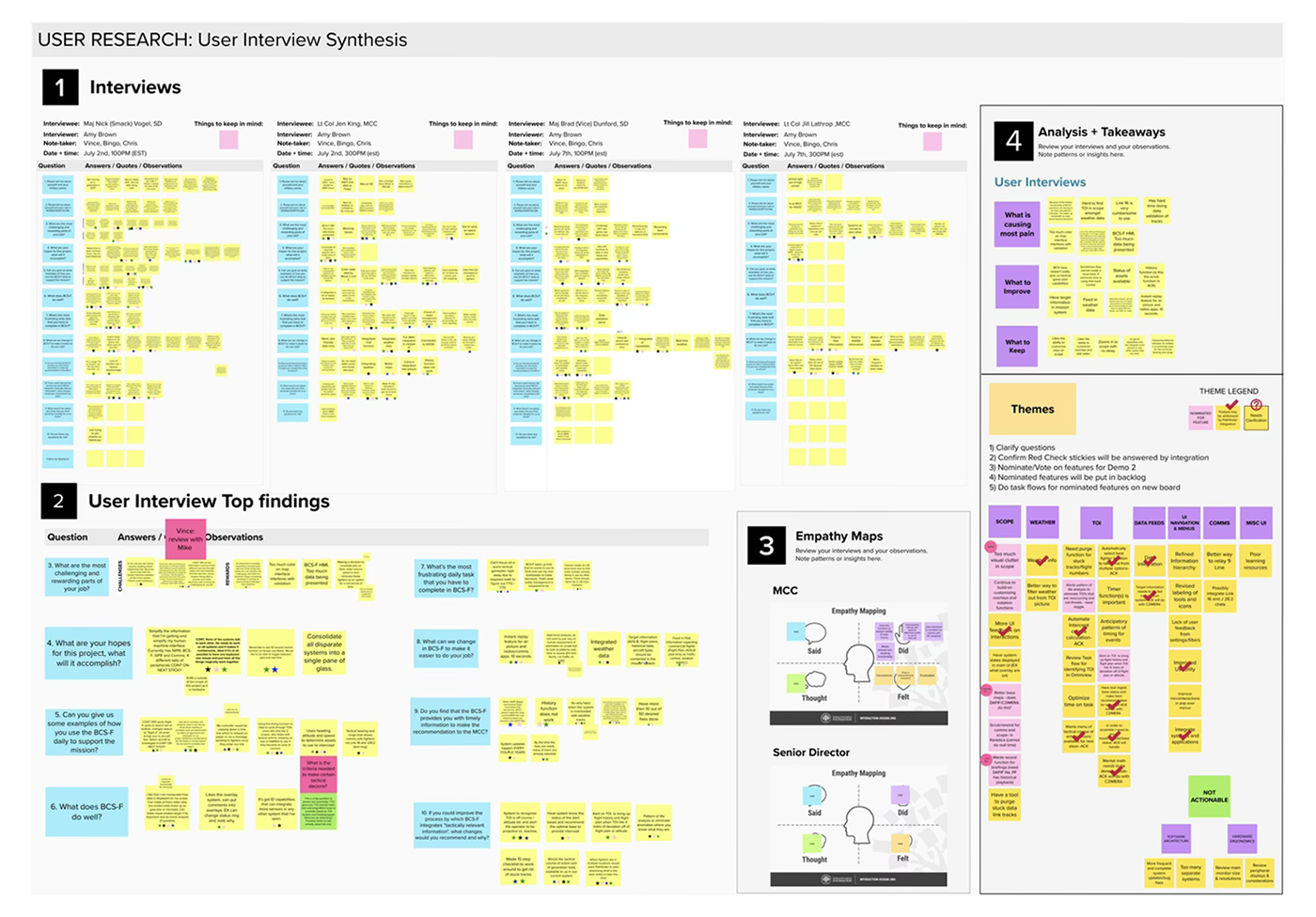
Research and user interviews were conducted to determine user goals, the state of current data ecosystem, newly requested features, and included a comparative analysis.
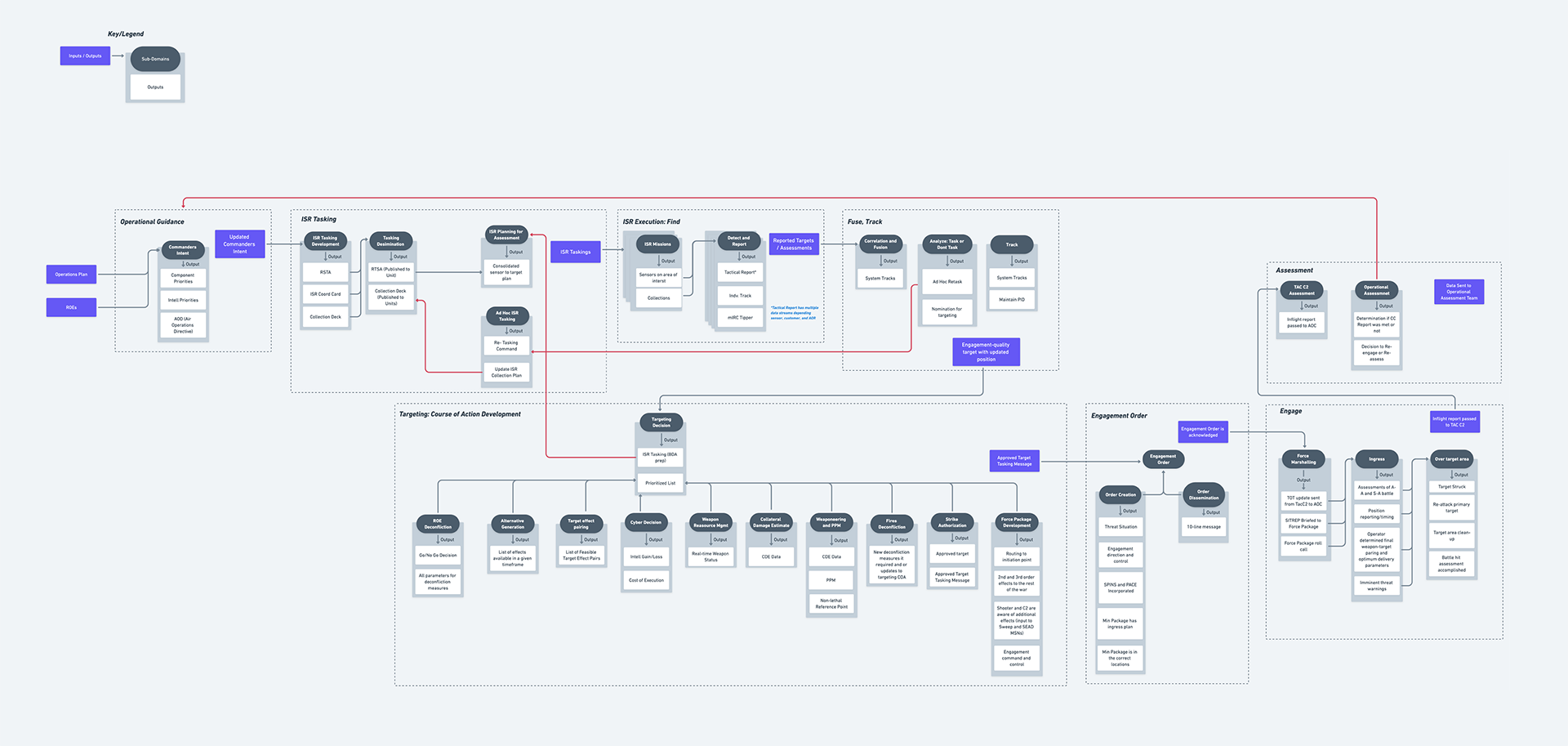
Per the user interviews and research, a total of 157 task pain points were uncovered and re-architeded within the ABMS data and task ecosystem.
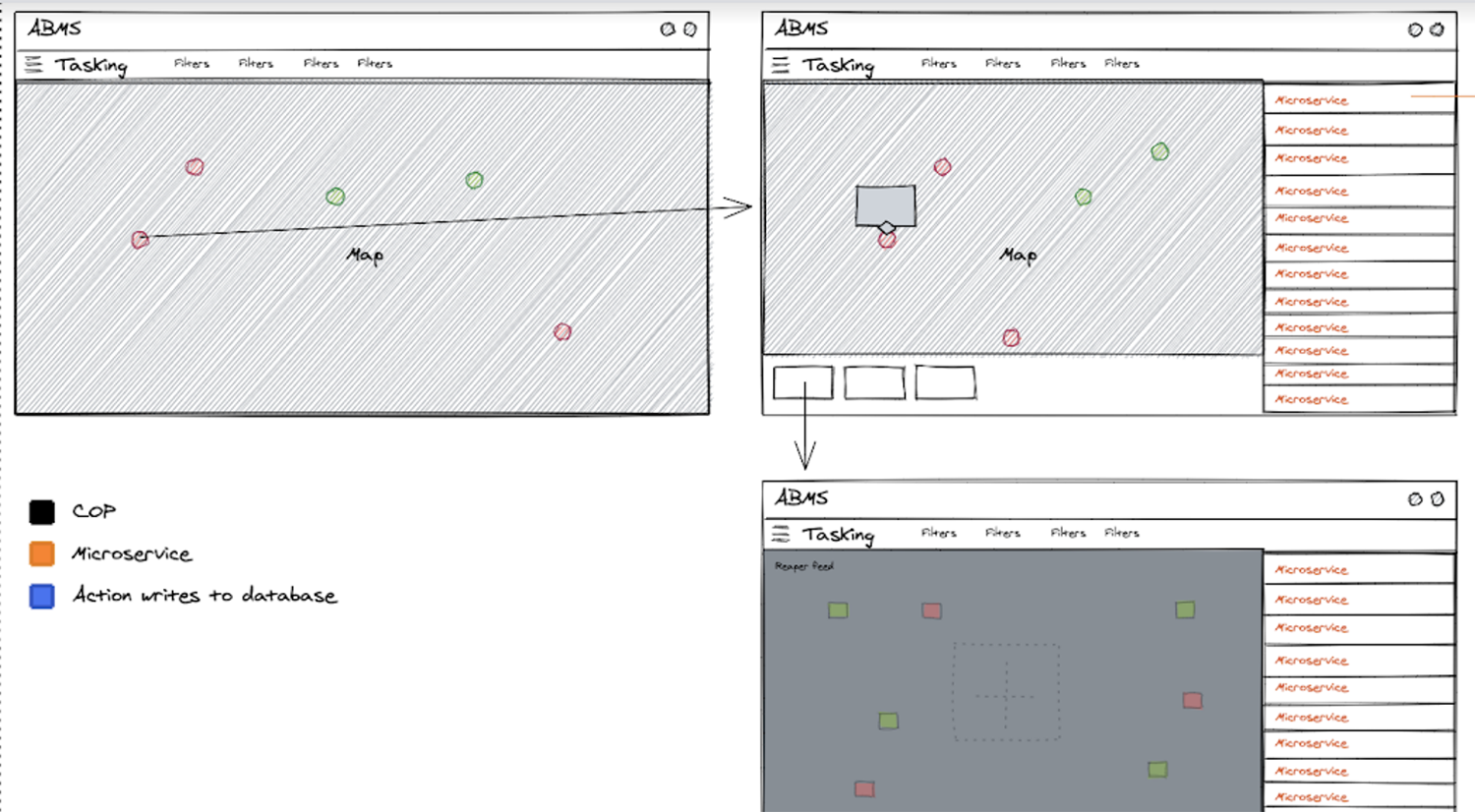
Early wireframes prioritized showing everything at once, which testing revealed created cognitive overload during time-sensitive scenarios. Wireframing shifted toward establishing a strict information hierarchy (i.e. what an operator needs in 3 seconds versus 30) using progressive disclosure instead of dense, flat layouts.

A modular system included a pattern library of standardized components like status indicators, alert severity, and geospatial markers across operator roles, so pattern recognition could transfer between screens instead of forcing analysts to reinterpret each view from scratch.
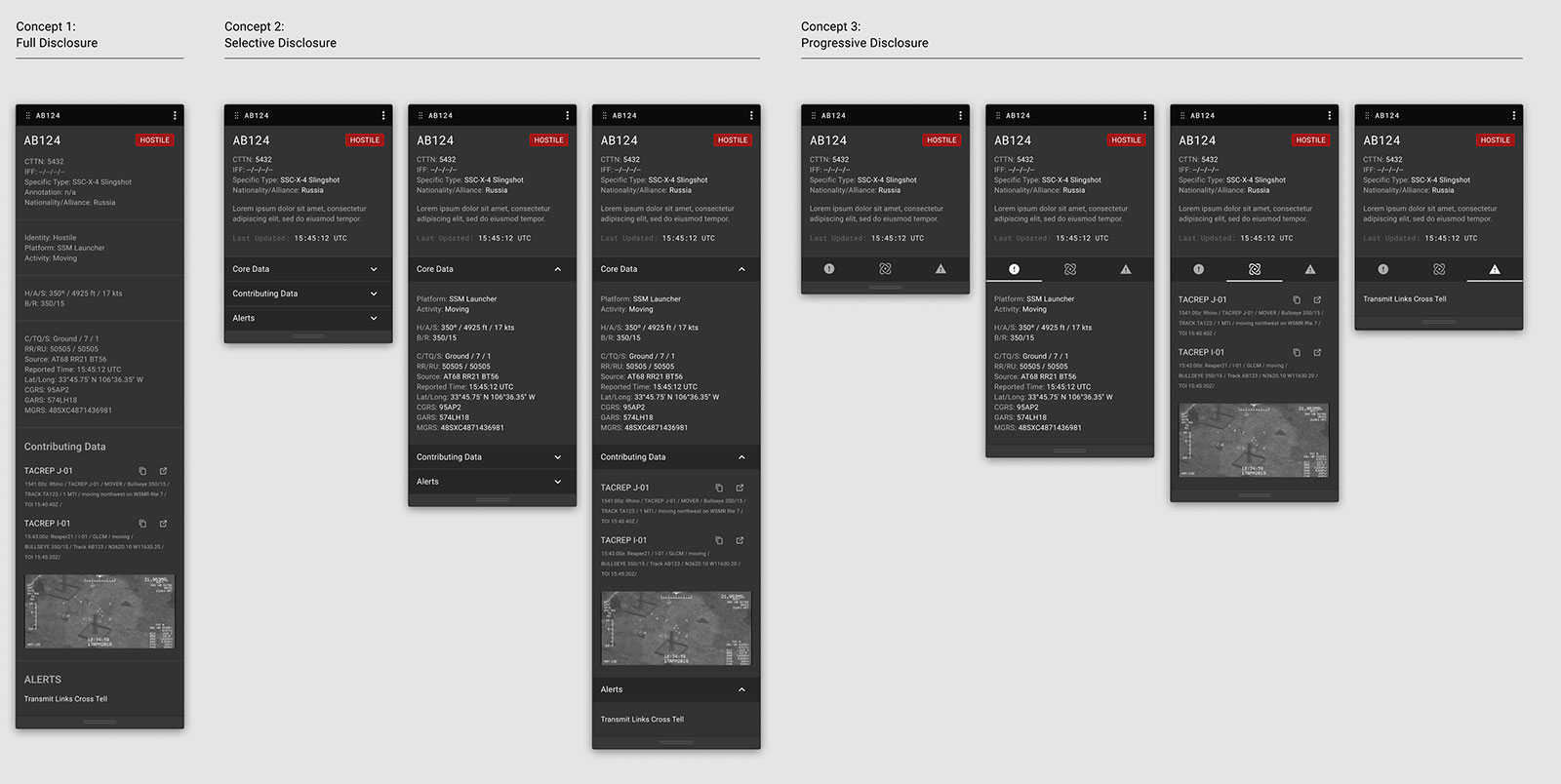
Concepting explored how to visualize the Common Operating Picture (COP) in a way that balanced geospatial detail with operational clarity, testing multiple directions against real mission scenarios to see how quickly commanders could identify targets and select a Course of Action (COA) under time pressure.
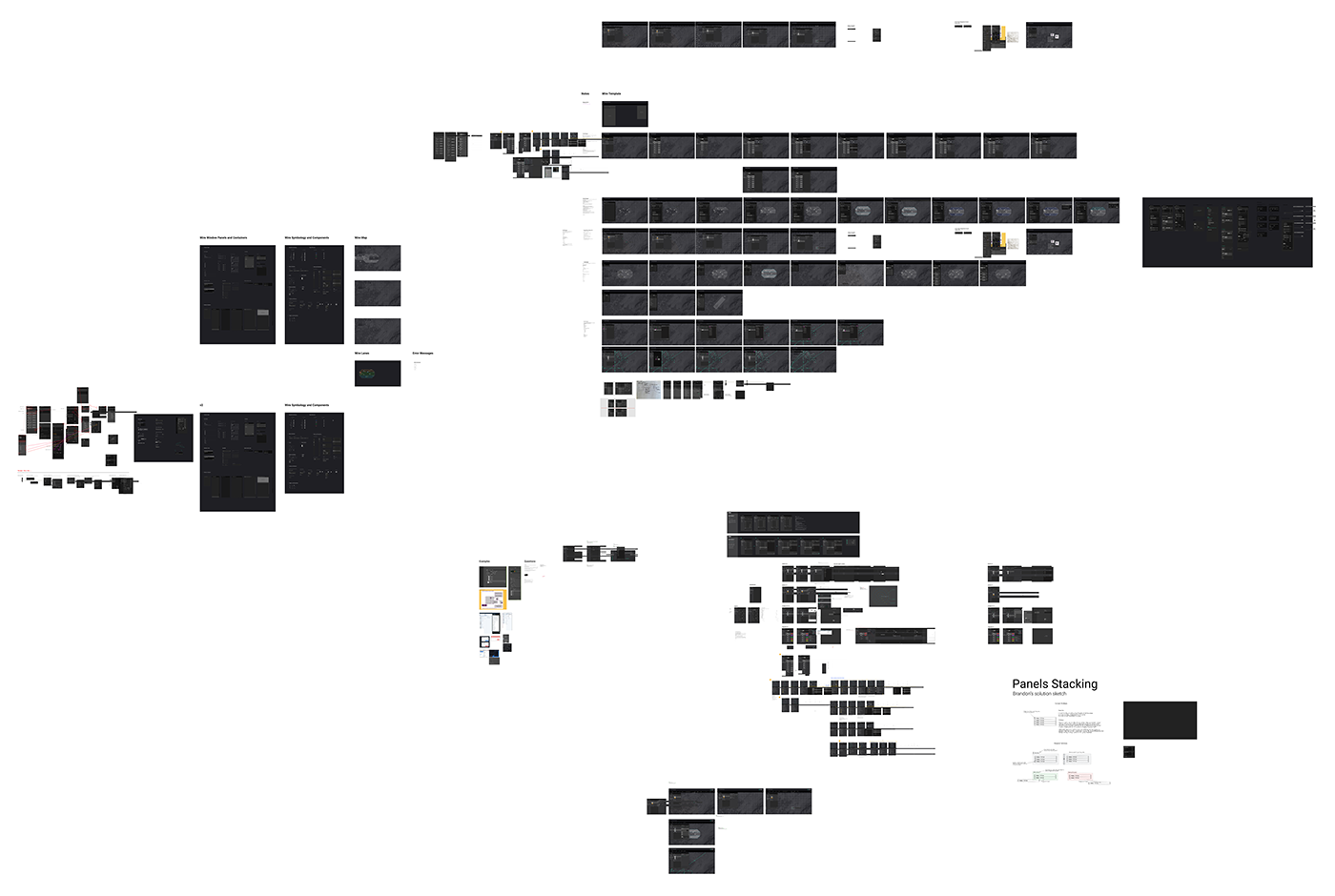
I built a shared component sandbox so our team of six UX designers, each owning a different user function of the COP (i.e. wrorkspace preferences, visual object labeling, surveillance lane designation, surveillance grids customization, custom tools for tasks including draw, cut, copy/paste, and geomap preferences), could design against consistent interaction patterns instead of solving the same problems independently.
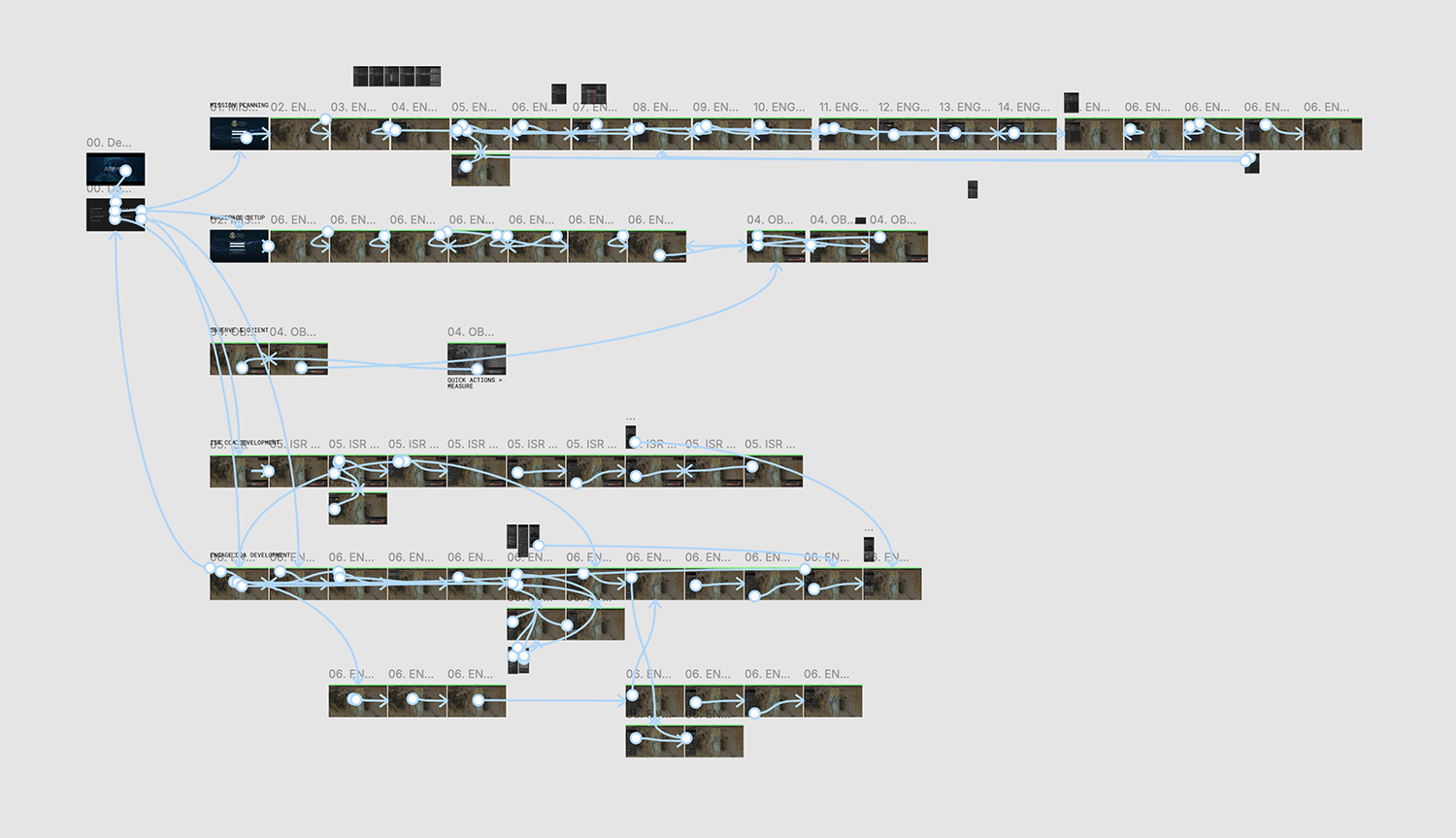
Interaction patterns focused on how operators move from a high-level alert into supporting detail without losing situational awareness using overlays and contextual drill-downs rather than full-screen navigation, so operators stay oriented during fast-moving scenarios.
QUALITATIVE IMPACT & OUTCOMES
OmniaONE improved operational visibility, reduced workflow fragmentation, and streamlined surveillance coordination across monitoring environments.

Progressive disclosure replaced dense displays, cutting time for command to identify what mattered most under pressure.

Research and audit work identified and restructured 157 task-level pain points across the ABMS data and task ecosystem.

Preserving familiar interaction patterns where operator pushback justified it avoided unnecessary retraining across a large distributed team.

A shared design system let six designers and multiple product teams with various companies work in parallel across the COP without diverging patterns.